
Long before "perfume" meant Paris, it meant Italy. Alcohol-based perfume, the perfumed glove, the citrus cologne, the first printed book of recipes: all were assembled in the trading cities and courts of the Italian peninsula and carried from there across Europe. To tell the story of a Milanese house founded in 1778 is to pick up one thread of a very long weave. This is the weave.
Europe's first capital of perfume was Venice, and the reason was cargo. Astride the sea roads to the Levant and the East, the Republic was the door through which the perfumer's raw materials reached the West: musk from the Himalaya, ambergris from the Indian Ocean, benzoin and camphor from Sumatra, cloves and nutmeg from the Moluccas, civet and sandalwood and frankincense, the whole exotic palette a European workbench could not otherwise obtain. For centuries the perfumer of Paris or Antwerp compounded, in effect, whatever Venice had landed.
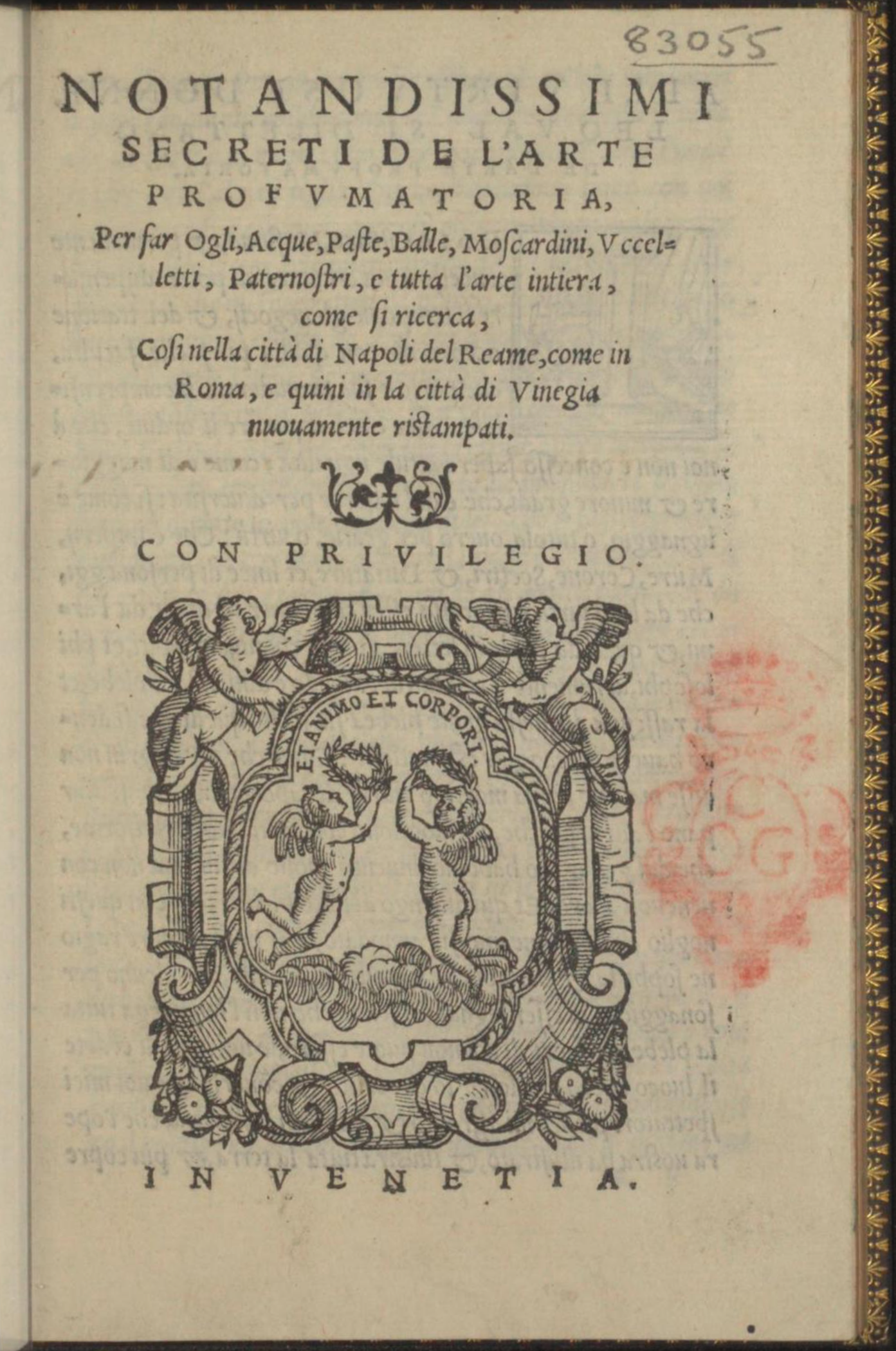
Out of that abundance grew a craft. Venice's perfumers were called muschieri, after the musk that ran through their recipes, and in 1555 one man who knew their trade, Giovanventura Rosetti, published in the city the Notandissimi secreti de l'arte profumatoria, the first printed book on perfumery in the Western world: more than three hundred working recipes for scented oils and waters, pastes and moscardini, the pomander balls called balle, perfumed beads strung as paternostri, even scented birds moulded from paste. What had been a guild secret was now a book anyone could buy.
And the hands that made the scent made much else from the same shelves. Venice's perfumers worked alongside its spezieri, the apothecaries who had shared a guild with the physicians since the Middle Ages and who compounded, from the same imported roots and resins, medicine and cosmetic and, for a paying client, poison. Perfumer, druggist and poisoner were one trade, divided only by dose and intent. It is the first sounding of a theme that runs through this whole history: a perfume began as a near relation of a medicine.
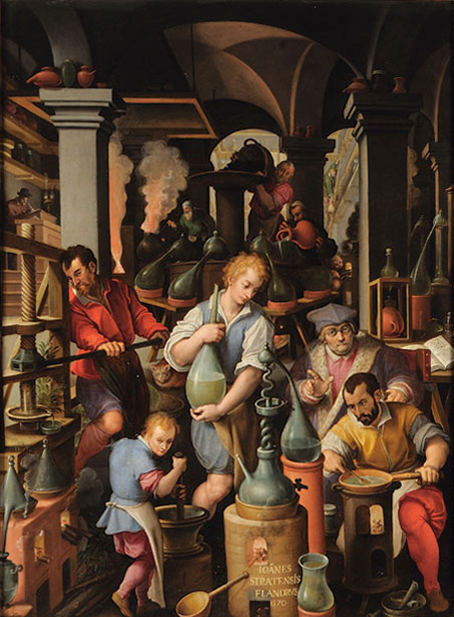
If Venice supplied the materials, Florence supplied the ambition. In 1555 Duke Cosimo I, a lifelong student of alchemy, founded a fonderia, a distilling laboratory, in the Palazzo Vecchio; his son Francesco I moved it to the Casino di San Marco and filled it with distillers, alchemists and artists working side by side on perfumes, medicines, and the secrets of porcelain and rock crystal. The scented gift became an instrument of Medici statecraft, as deliberate as a portrait.
Beside the court worked the cloister. Since the thirteenth century the Dominican friars of Santa Maria Novella had kept a physic garden and a monastic pharmacy; their officina, still trading, is often called the oldest in the world, and it is a perfumery that has never stopped being a chemist's. It was in this world that one of the decisive advances was made: the move from perfumes carried in oil and vinegar, which soon turned rancid, to perfumes carried in spirit of wine, that is, in alcohol, which held clear and kept. The modern perfume begins there.
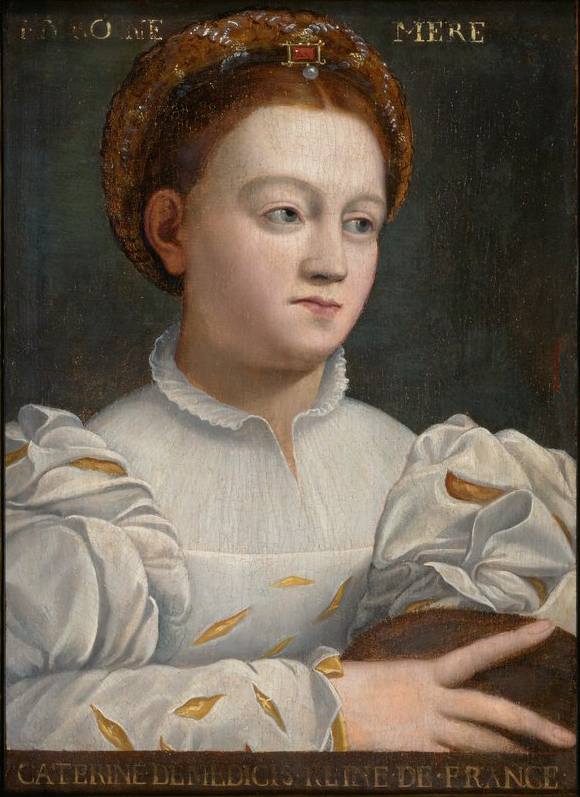
The tale Italy tells best belongs to this Florence. In 1533 the fourteen-year-old Caterina de' Medici married the future Henri II of France and, the story runs, carried perfume over the Alps: chests of scented gloves and her own perfumer, a Florentine remembered as Renato Bianco, René le Florentin to the French, credited with the Acqua della Regina, the queen's citrus water, made in Florence still. Like most wonderful stories, it has been improved in the retelling. The poisoned gloves of the legend belong to romance, not record, and France did not learn to smell from one teenage bride. What survives scrutiny is better, because it is true and structural: in the sixteenth century fine perfumery ran from Italy outward, and the Italian perfumer at a foreign court, holding formulas the rest of Europe did not yet have, was a real and recurring figure. Caterina is not the exception. She is the emblem.
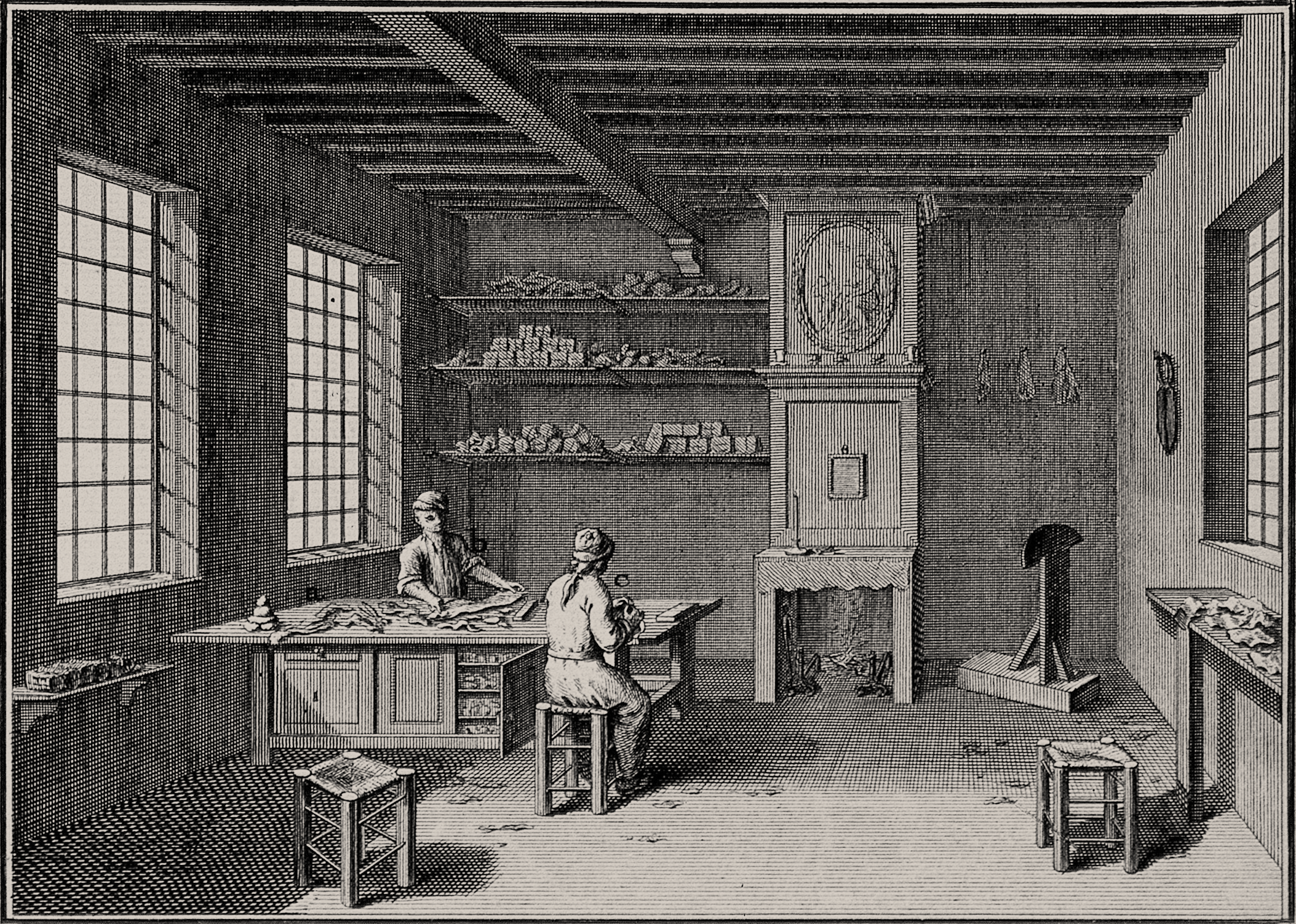
One object holds the early history together: the glove. Fine leather stank of the tannery, and the cure was to drown the smell in scent, so across Renaissance Europe the glover and the perfumer became, very often, the same tradesman. In the Provençal town of Grasse the marriage hardened into an industry; its gantiers-parfumeurs, its glover-perfumers, in time let the gloves go and kept the perfume, planting the fields of jasmine, rose and tuberose that make Grasse the capital of raw materials to this day. It was in that tradition that a young man named Angelo Migone learned his craft before opening a small perfumery in Milan in 1778, working with fresh flowers brought up from Genoa, rose water, orange-flower water and soap. The line that begins at a Florentine court and a Venetian quay runs, by way of a Provençal glove, to a Milanese counter.
There is a coda the world files under another country's name. At the end of the seventeenth century a man from the Val Vigezzo, an Alpine valley near Lake Maggiore that in his day belonged not to Piedmont but to the Duchy of Milan, carried the craft of his mountains into Germany: Gian Paolo Feminis settled in Cologne and produced a scented spirit he called Aqua Mirabilis, "wonderful water." His kinsmen and successors from the same valley, the Farina family, turned it into a perfume and a name, and "Eau de Cologne" is simply the French for the city where these Italian emigrants sold their Italian invention. The most famous German perfume in history was made by men from the mountains above Milan, a story with a tangled origin all its own.
The nineteenth century changed the scale of everything. Steam, the railway, the illustrated newspaper and, at its close, the electric light turned the perfumer's shop into the perfumer's factory. A newly unified, industrialising Italy grew a modern cosmetics trade with its capitals in the north, houses that manufactured soap, powder, hair water and scent by the crate for a national and export market. Migone, founded in 1778, was among the oldest of them, and it was not alone. In Florence the English pharmacist Henry Roberts founded in 1843 the house that became Manetti & Roberts, and in 1878 put out a talc-and-boric-acid powder he called Borotalco, on Italian shelves still. In Parma, Lodovico Borsari took up in 1870 the formula for the Violetta di Parma, the violet bound to the memory of Marie Louise, Napoleon's widow and duchess of the city, and built it into one of Italy's first true perfume industries.
Meanwhile the perfume itself was changing in the bottle. From the eighteen-sixties, aromatic chemistry began to synthesise the molecules behind familiar smells: coumarin, the scent of new-mown hay, in 1868; vanillin in 1874; and in 1893 the ionones, which captured the smell of violets for the first time and gave a scent like the Violetta di Parma a synthetic heart. The new molecules did not replace the jasmine fields and the iris roots; they took their place beside them, and the modern perfume, part garden and part laboratory, was born. Here is exactly where Migone belongs: rooted in the craft of 1778, grown into an industrial Milanese house that distilled its own iris and shipped to five continents, one of the firms that carried Italian perfumery out of the apothecary and into the twentieth century.
For most of the twentieth century the thread nearly broke. Two wars, a changed market and the rise of the great French and then multinational houses pushed the old Italian trade to the margins, and one by one its historic names went dark: Migone closed in 1955, others before and after it, until "perfume" belonged, in the popular imagination, to France. A few endured, Santa Maria Novella never stopped, Borsari and the makers of Borotalco carried on, but the long Italian tradition slipped, for a couple of generations, out of sight. The making of scent itself moved away too, from the perfumer's own shop to the laboratory and the multinational, so that even an Italian perfume was now likely composed elsewhere.
Then, in the last few decades, the thread was picked up again. A dense new generation of Italian niche and artisan houses, clustered around Florence, Milan and Bologna, has turned the country back into one of the reference points of artistic perfumery, and its fastest-growing quarter, precisely by returning to what this history was always made of: Grasse jasmine, Florentine iris, Sicilian citrus, the finest materials and the patience to use them well. The heritage had never truly gone. It was waiting to be gathered up.
Italy's perfume history is not one golden age but a long thread: the musk and ambergris on a Venetian quay, the first printed book of scents, the alchemists' fonderia and the friars' still, the queen's gloves going north, the glove-maker turned perfumer at Grasse, the mountain valley that gave the world eau de cologne, the northern factories with their medals and their crates, and the makers taking it up again today. The Foundation's work is one small part of holding it: to keep a single two-hundred-and-fifty-year strand firmly enough that the whole weave becomes easier to see.
← Back to the Journal